
Braces or clear aligners: which may suit your smile?
Both braces and clear aligners can move teeth, but the right appliance depends on the bite, complexity of movement, age, daily habits and clinical supervision.
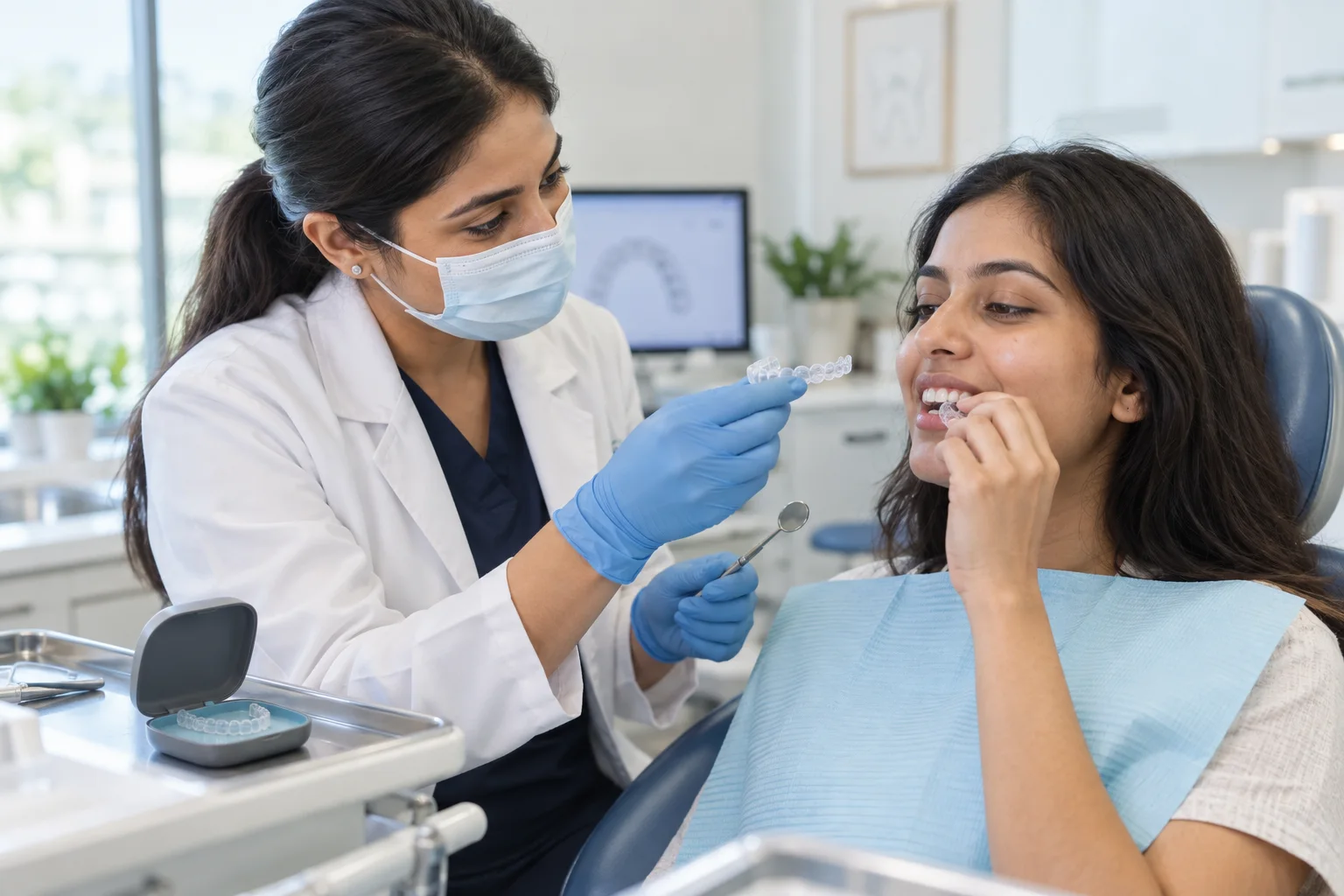
What orthodontic treatment can address
Crowding, gaps, protruding teeth and bites that do not meet properly may benefit from orthodontic treatment. The goal is not only a straighter appearance; a stable bite can also support chewing, speech and easier cleaning.
Records may include photographs, scans or impressions and X-rays. These help the clinician understand tooth position, roots, bone and jaw relationships before recommending a plan.
Braces and aligners have different routines
Fixed braces work continuously and can manage a broad range of movements. They require careful cleaning around brackets and regular adjustment appointments.
Clear aligners are removable and discreet, but they depend on consistent wear. They are not the best option for every movement, and unsupervised mail-order treatment can miss decay, gum disease or bite problems.
Questions to ask before starting
Ask about the diagnosis, realistic goals, expected treatment range, refinements, retainers, emergency visits and the total fee. The quoted duration is an estimate because biological response and appliance wear differ between patients.